Why tree plantation matters more than ever in 2026
Vanamitra Team · Apr 14, 2026 · 5 min read
Gujarat lost 2.1% of canopy cover last decade. The math on what one tree gives back — and what a thousand can.
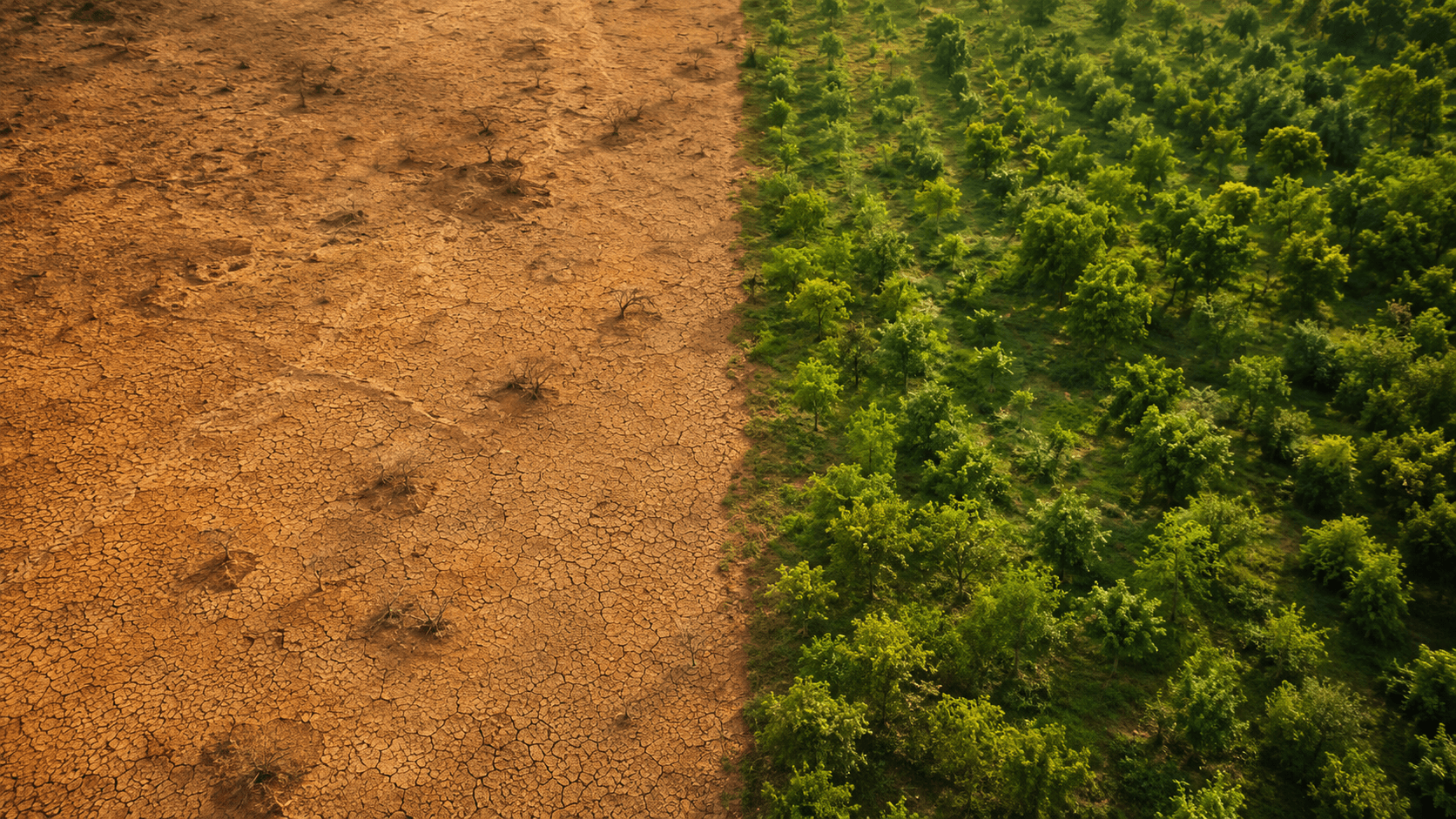
Gujarat's forest cover declined by 2.1% between 2015 and 2023, according to the Forest Survey of India. That number sounds small until you convert it: roughly 58,000 hectares, gone. The causes are the familiar ones — agricultural expansion, construction on the urban fringe, and climate-accelerated die-off of trees already under stress. The kharif cropping belt around Kheda has lost almost its entire tree cover in one generation.
A single mature native tree absorbs between 20 and 28 kg of CO₂ per year, provides microclimate cooling of up to 2°C within a 15-metre radius, and recharges groundwater at a rate of roughly 400 litres per monsoon through its root channels. These are not metaphors. They are measurements, and they compound. One thousand trees across 10 acres does not equal one thousand times the effect of one tree — it equals more, because trees in proximity create systems.
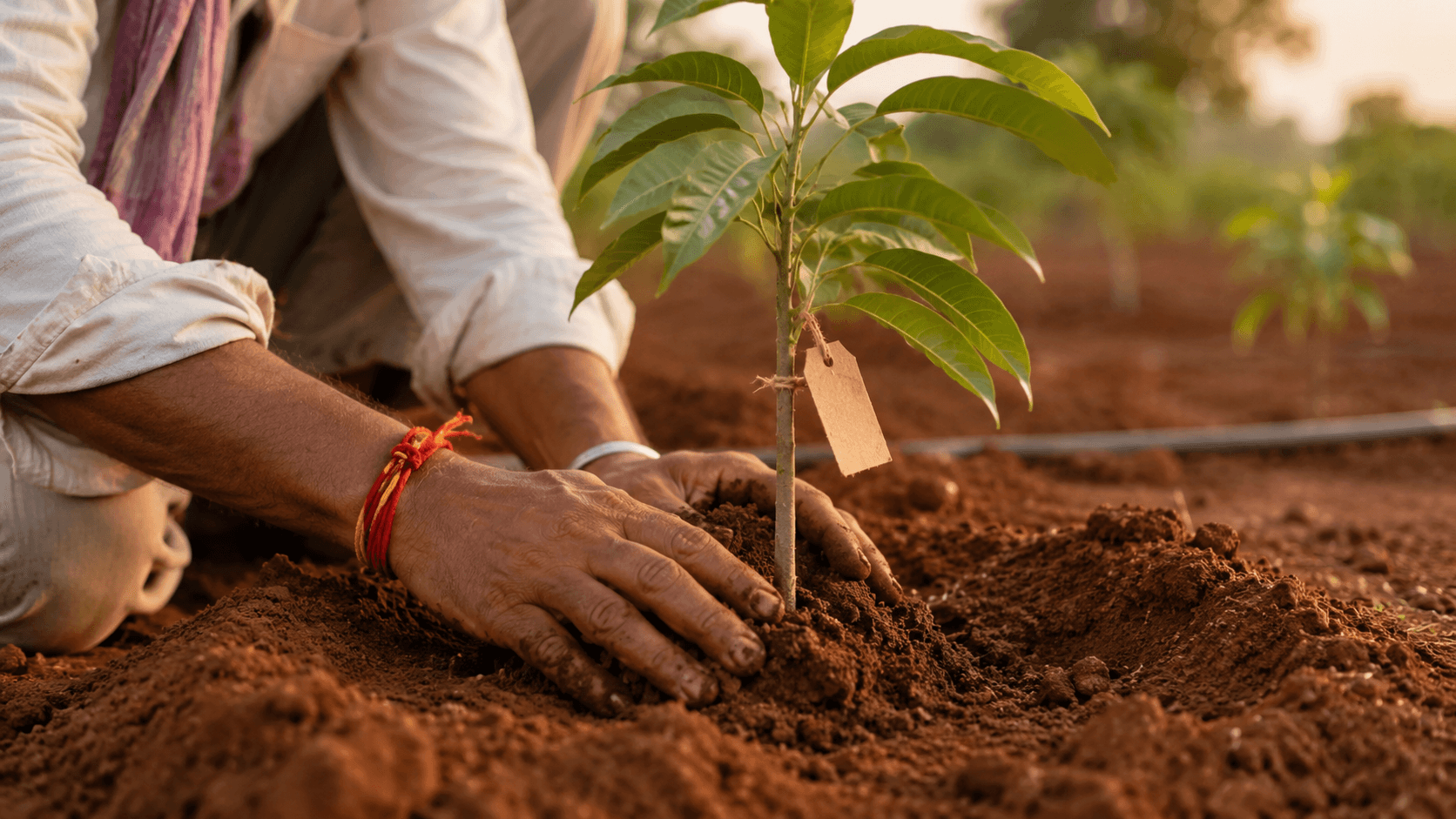
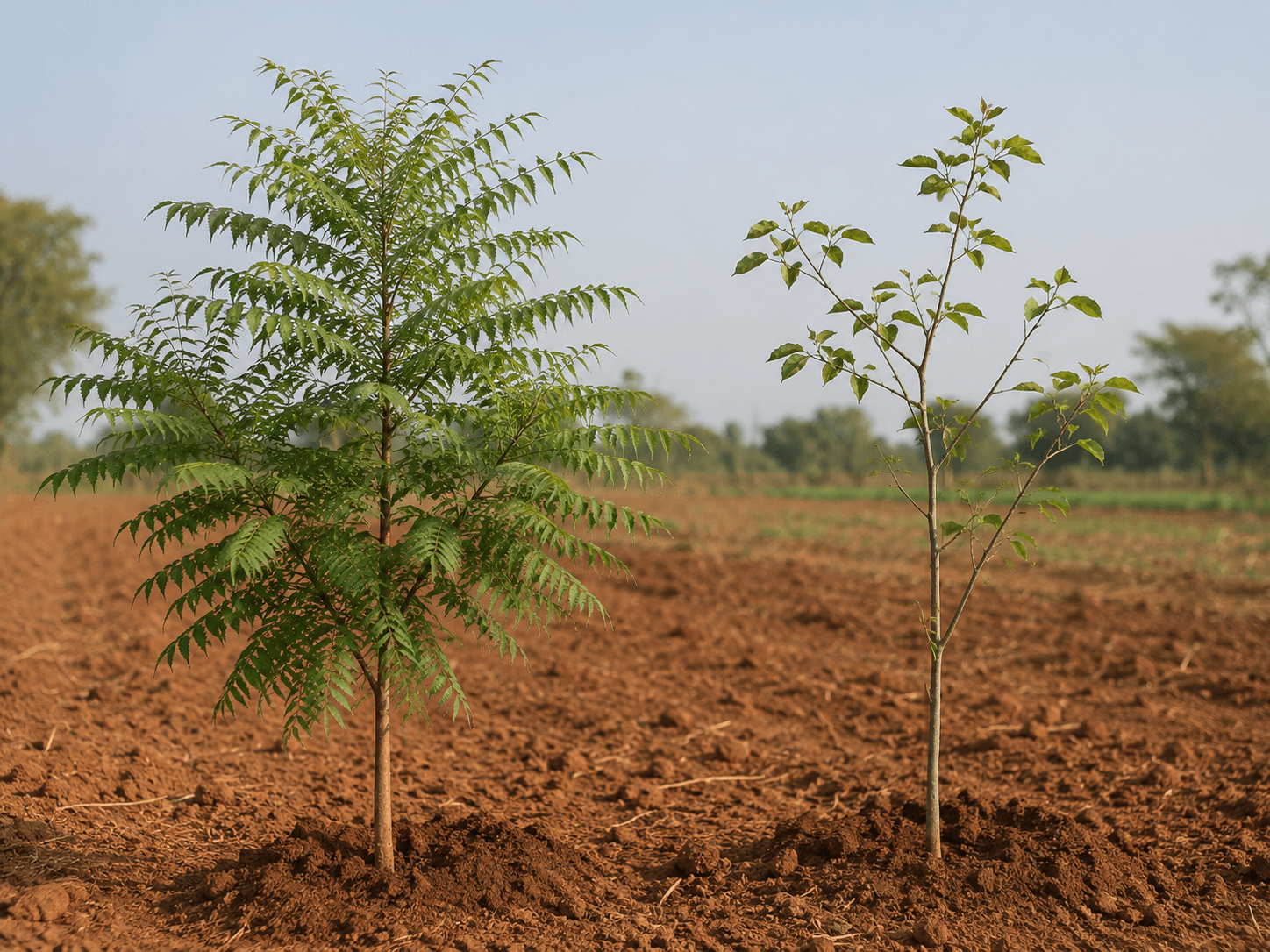
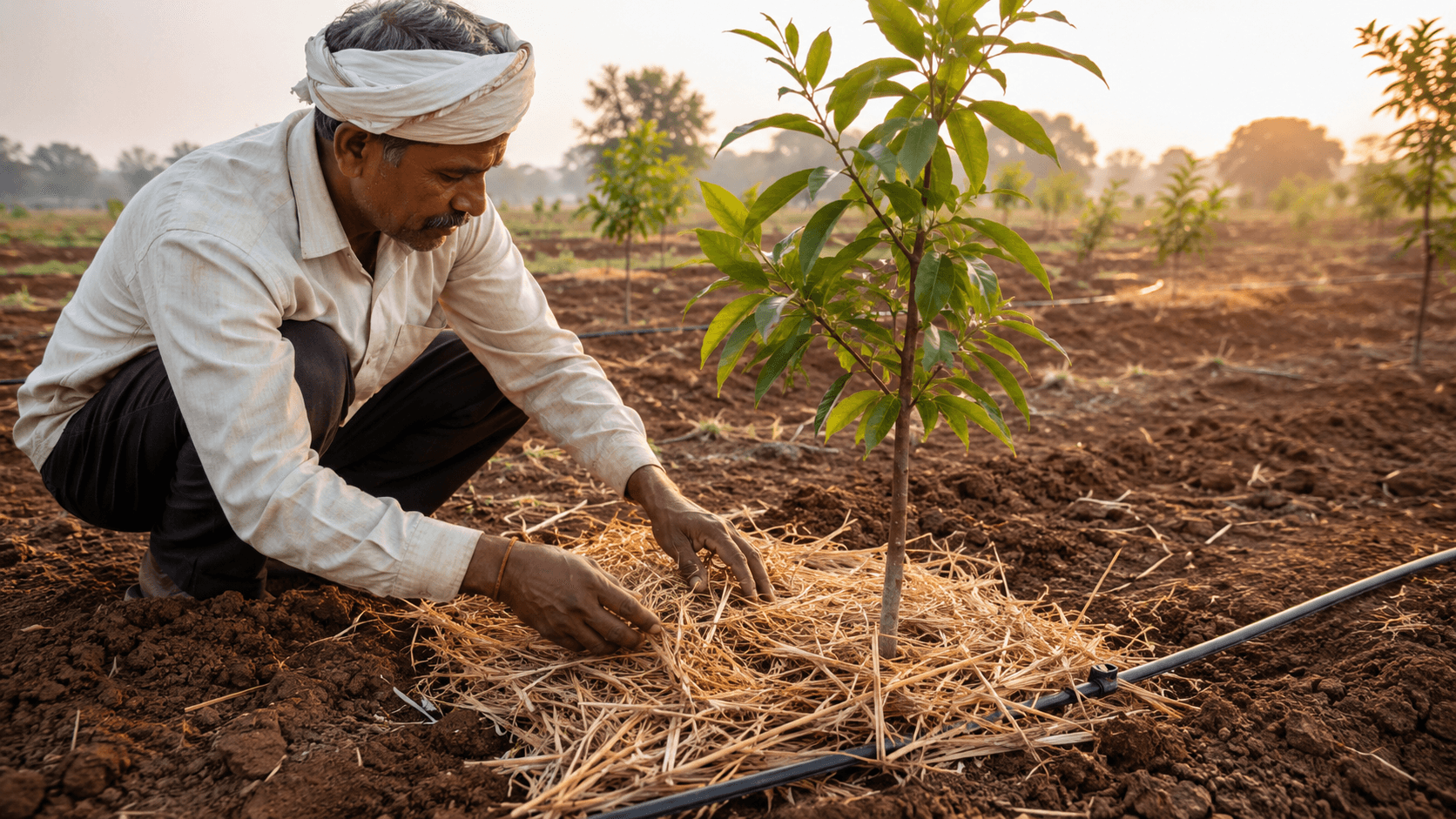
We are not planting a symbolic forest. We are planting a functional one — species chosen for the specific soil type and rainfall pattern of the Kheda district, maintained over years, and monitored for outcomes. The ₹500 you pay is not a donation that disappears into overhead. It buys a specific sapling, planted by a specific person, on a specific day, and tracked until it is taller than you are.
Written from Vasna village, Kheda district, Gujarat. We plant on Tuesdays and Saturdays.