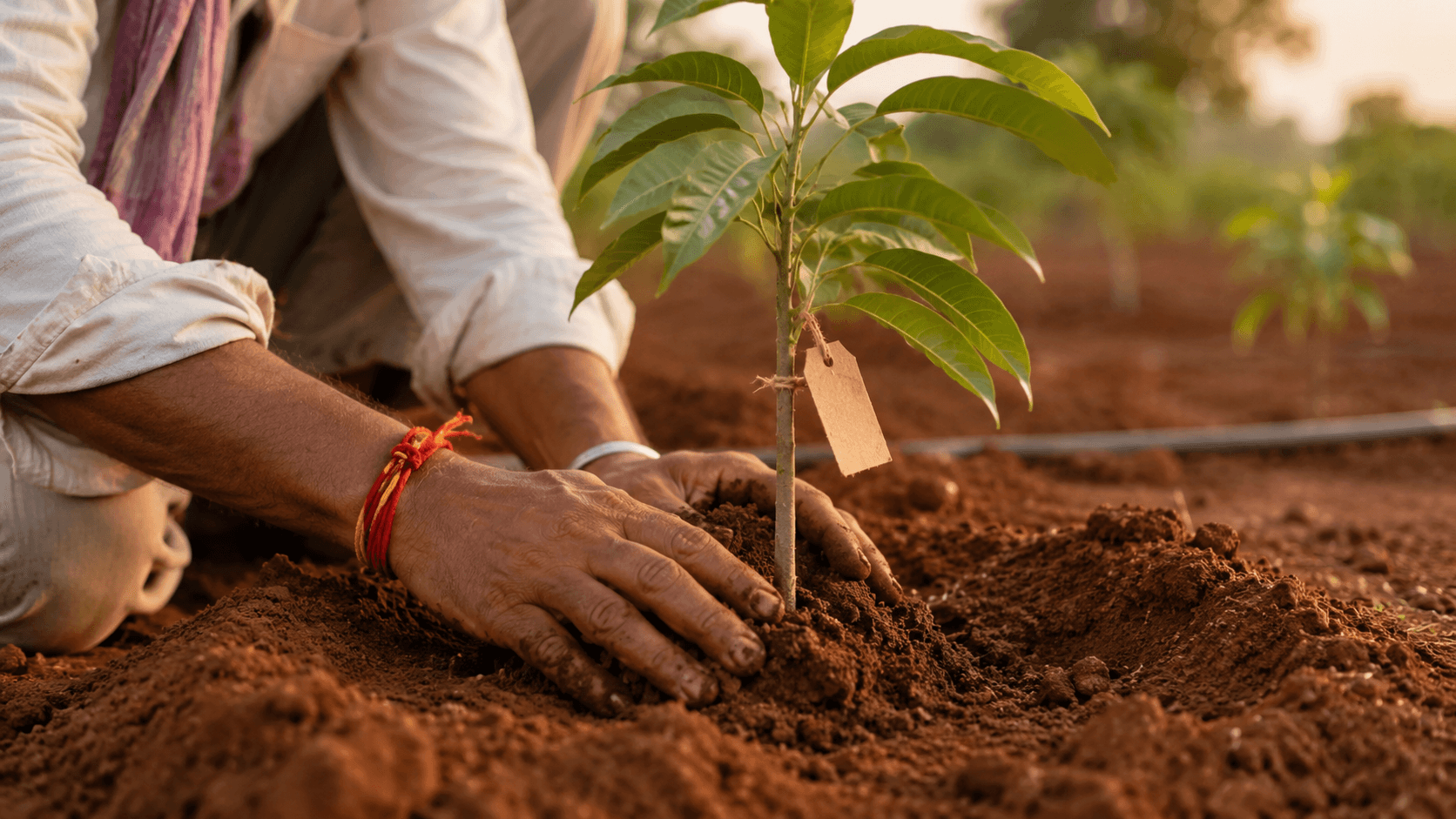
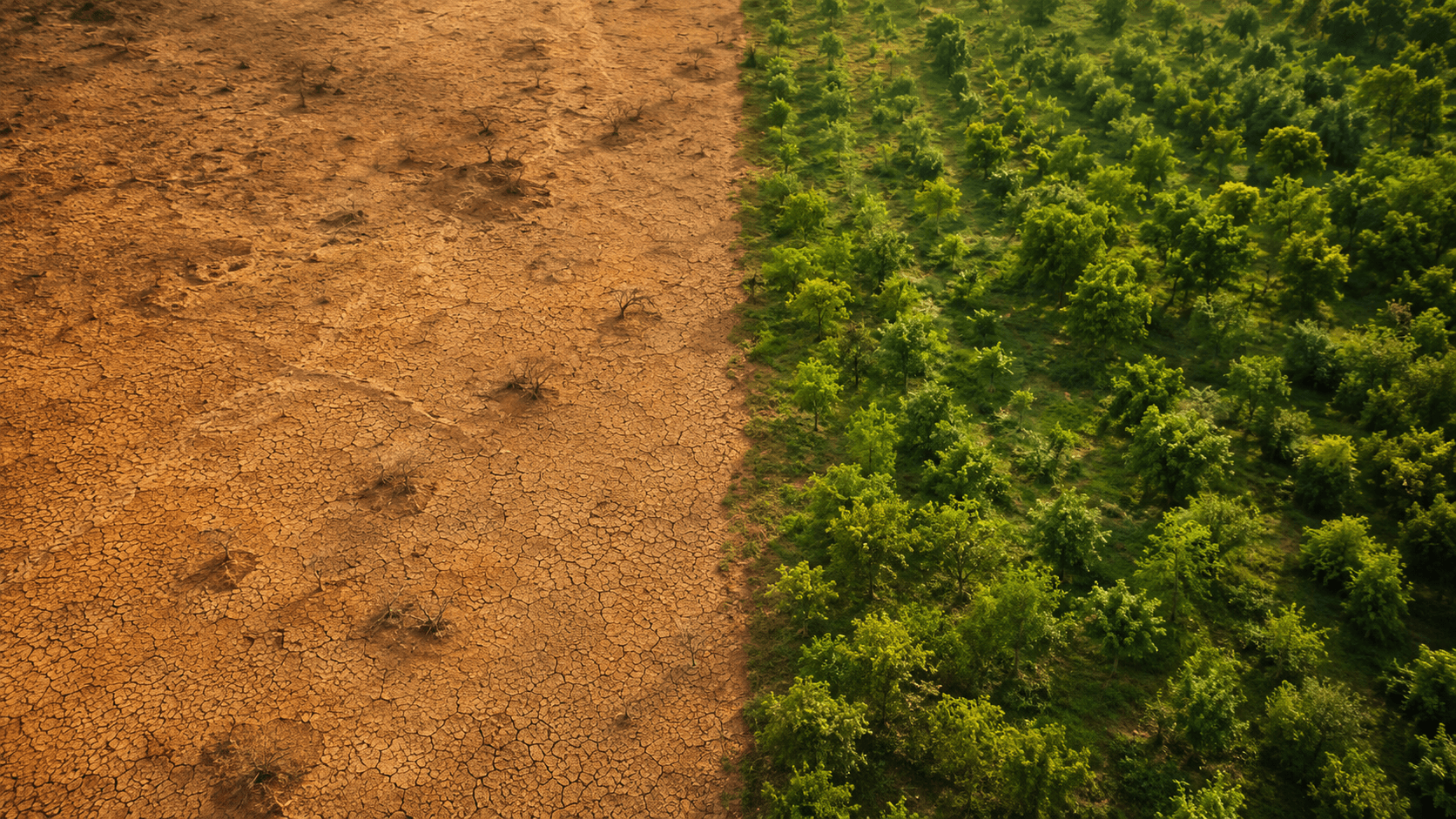
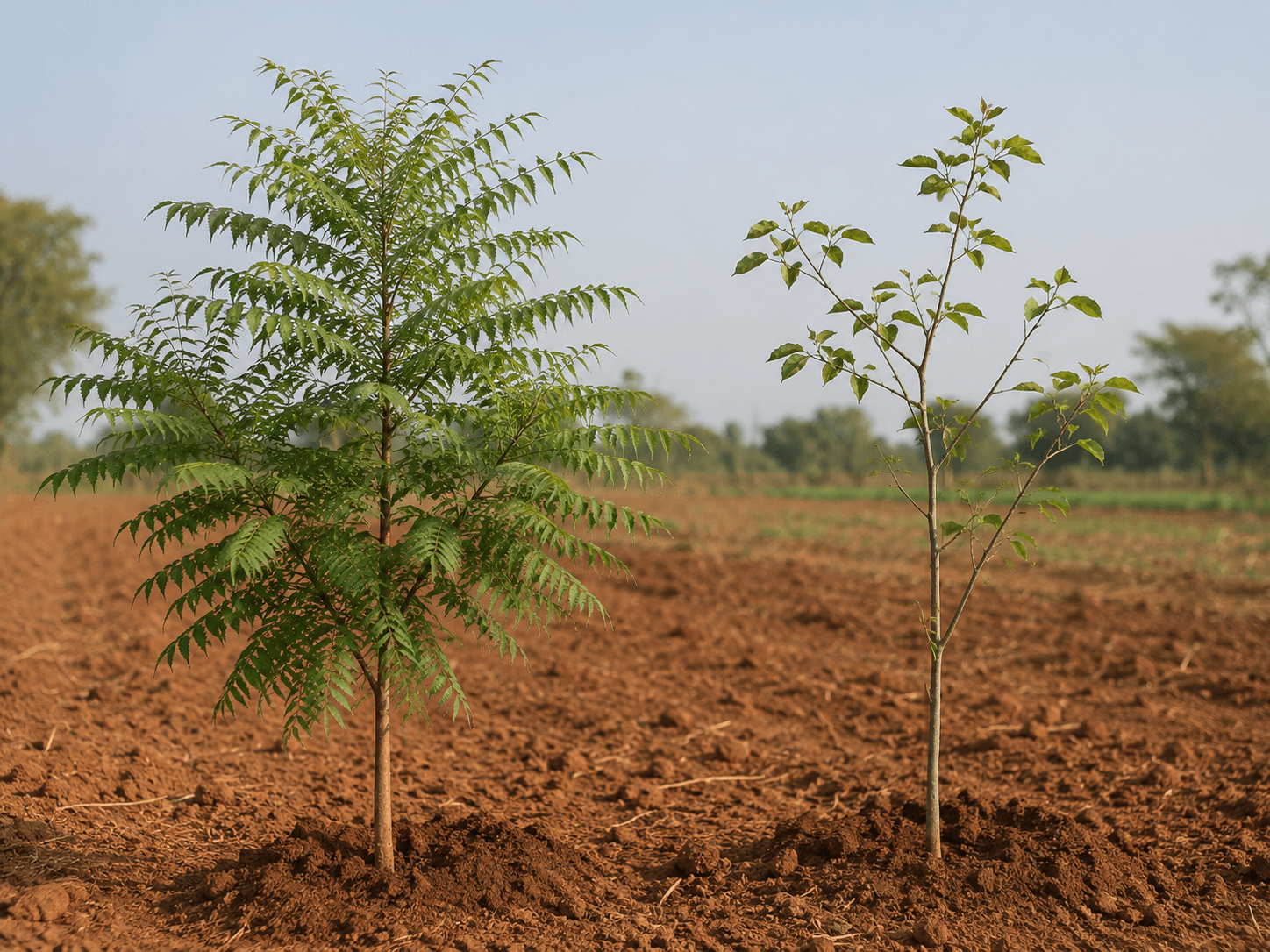
Ensuring survival — what happens after a tree is planted
Vanamitra Team · Mar 18, 2026 · 8 min read
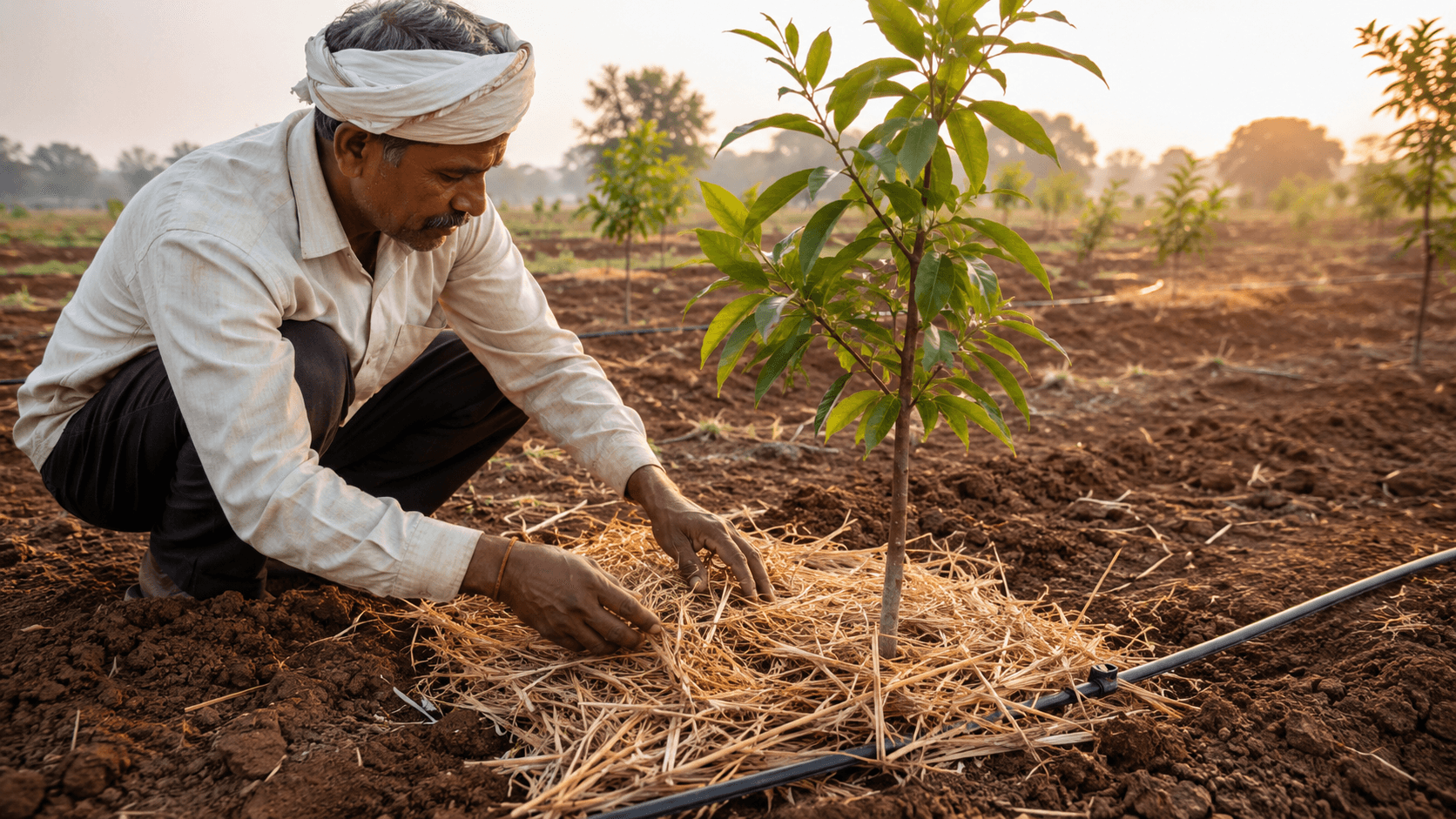
Three years of mulching, irrigation, fencing and visits. The boring work that actually grows a forest.
A tree dies for one of four reasons in the first three years: inadequate watering during the first dry season, competition from invasive grass species, pest infestation at the root zone, or physical damage from animals or vehicles. Our 94% survival rate is built around removing each of these risks systematically, not heroically. There is nothing clever about it. It is boring, consistent work done on a schedule.
In the first monsoon, we mulch each tree with a 10-cm layer of dry biomass — typically composted coir and leaf litter — to suppress grass competition and retain moisture. After the rains, we install a drip line at the root zone for the dry season. Our team walks every row twice a week in the summer, checking soil moisture and looking for signs of stress. When a tree wilts, we respond within 24 hours.
Tree guards are non-negotiable. We use cylindrical wire mesh, 90 cm tall and 60 cm in diameter, staked to a bamboo pole. This prevents damage from nilgai, rabbits, and the occasional errant tractor. We remove the guard when the trunk diameter reaches 5 cm, which typically happens in year two or three, depending on species. None of this is expensive. It is, collectively, the reason trees survive.
Written from Vasna village, Kheda district, Gujarat. We plant on Tuesdays and Saturdays.